Food as Medicine: Dietary Wellness From a TCM Perspective
"The five grains nourish, the five fruits assist, the five meats benefit and the five vegetables complement; combined in harmony, they replenish essence and qi." (Huangdi Neijing)
Traditional Chinese Medicine (TCM) emphasizes that “food and medicine share the same source”: everyday food not only satisfies hunger and nourishes the body but can also support wellness. As modern life brings heavy stress and unbalanced eating, food therapy is drawing more and more attention. So how does TCM view food therapy?
1. The Role of Food Therapy in TCM
The Huangdi Neijing (The Yellow Emperor’s Classic of Internal Medicine) says: “The five grains nourish, the five fruits assist, the five meats benefit and the five vegetables complement; combined in harmony, they replenish essence and qi.” This emphasizes the fundamental role of diet in wellness. Today, the “five grains” broadly refers to grains and beans, the foundation of a healthy diet that nourishes the body, provides energy and builds a strong constitution. The “five fruits” refers to fruit, an essential supporting food in a balanced diet. The “five meats” refers to meat, which makes up for nutrients the staple grains lack. And the “five vegetables” refers to vegetables, which stimulate appetite, satisfy hunger and aid digestion, all of great benefit to health. This aligns closely with the modern “healthy eating pyramid”: staples as the base, fruits and vegetables as support, moderate amounts of meat, dairy and beans, and little oil, salt and sugar.
2. Three Key TCM Principles of Dietary Wellness
1. Tailored to the Individual
Everyone’s constitution is different, so dietary wellness plans differ too.
2. Adjusted to the Season
Diet should change with the seasons. Light foods suit spring, sweet and cooling foods suit summer, moisturizing foods that generate fluids suit autumn, and warming foods suit winter.
3. Balancing the Five Flavors
Sour, sweet, bitter, pungent and salty each have their own role, and no single flavor should be favored too heavily.
3. The 9 Body Constitutions and Dietary Recommendations
TCM divides people into nine body constitutions. A constitution is generally inherited and then shaped by how we care for ourselves over time. Each constitution below has its own food therapy recommendations.

1. Balanced Constitution
A balanced constitution is a healthy one, combining good inherited strength with good self-care. Eat plenty of whole grains, vegetables and fruit, and only small amounts of greasy or spicy foods.
2. Yang-Deficient Constitution
Common signs include a heavier build, sluggish limbs, cold and aching lower back and knees, sensitivity to cold, loose stools, a pale complexion and tiring easily.
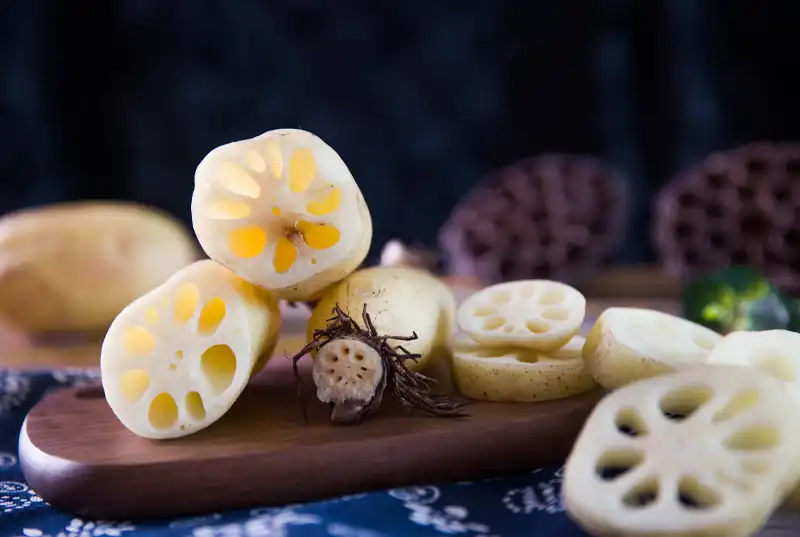
Eat more sweet, warming, qi-boosting foods such as beef, lamb, scallions, ginger, garlic chives and pepper. Eat little or no raw or cold foods such as cucumber, lotus root, pear and watermelon.
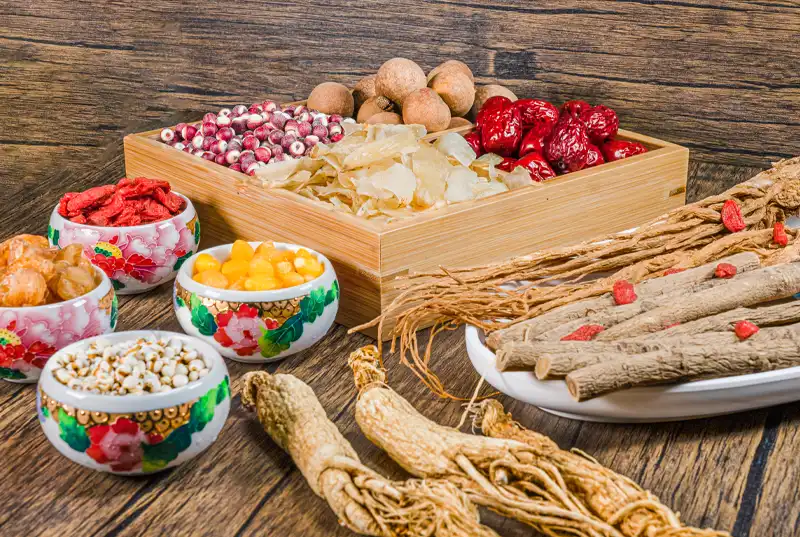
If you feel cold or often have cold hands and feet, try a tea of red dates, longan, codonopsis and astragalus, steeped in boiling water for 15 minutes.
3. Yin-Deficient Constitution
Common signs include a thinner build, warm palms and soles, a dry mouth and throat, a preference for cold drinks, dry stools and dark yellow urine.
Eat more sweet, cooling and moistening foods such as lean pork, duck, mung beans, winter melon, sesame and lily bulb. Eat less warming, drying foods such as lamb, garlic chives, chili peppers, scallions, garlic and sunflower seeds.
4. Qi-Deficient Constitution
Common signs include a soft voice, a pale complexion, fatigue and weakness, shortness of breath, reluctance to talk, and spontaneous sweating.
Eat more foods that replenish qi and strengthen the spleen, such as soybeans, white hyacinth beans, chicken, shiitake mushrooms, jujubes, longan and honey. Eat less of foods that deplete qi, such as betel nut, water spinach and raw radish.
5. Damp-Heat Constitution
Common signs include an oily, dull complexion, acne, a dry or bitter taste in the mouth, a heavy, tired body, red eyes, dry or sticky stools, dark urine, dampness in the groin area in men, and increased vaginal discharge in women.
Keep your diet light and eat more sweet, cold or neutral foods such as mung beans, water spinach, amaranth, celery, cucumber, winter melon, lotus root and watermelon. Eat less pungent, warming foods that add heat, and avoid tobacco and alcohol.
6. Phlegm-Damp Constitution
Common signs include oily, sweaty facial skin, chest tightness with a lot of phlegm, a heavy, sluggish body, a sticky or sweet taste in the mouth, and a preference for rich, fatty, sweet foods.
Keep your diet light, and eat less fatty meat and sweet, sticky or greasy foods. Eat more scallions, seaweed, winter melon, radish, kumquats and mustard.
7. Qi-Stagnant Constitution
Common signs include a depressed or irritable mood, the feeling of something stuck in the throat that can’t be swallowed or coughed up, sweating easily, a bland taste in the mouth and loose, unformed stools.
Eat more wheat, scallions, kelp, radish, kumquats and hawthorn. Avoid stimulating drinks such as tea and coffee before bed.
If you have bloating or indigestion, try a tea of hawthorn, tangerine peel and rosebuds, which helps digestion, moves qi and supports a healthy complexion. Do not drink this tea on an empty stomach. It is not suitable for pregnant women, people with acid reflux or people who often have stomach discomfort.
8. Blood-Stasis Constitution
Common signs include dark lips, a dull complexion, bruising easily, melasma, and, in women, frequent irregular periods and menstrual cramps.
Eat more black beans, kelp, radish, carrots, kumquats, oranges, pomelos, peaches, plums, hawthorn and rosebuds, and eat less fatty pork.
9. Blood-Deficient Constitution
Common signs include dry skin, pale lips and nails, dizziness and blurred vision, palpitations and insomnia, restless dreaming, a pale or sallow complexion, and light menstrual flow in women.
To support this constitution, make a soup with raw rehmannia, prepared rehmannia and longan, cooked together with pigeon or lean pork, to replenish qi, nourish yin and build blood.
4. New Food Therapy Options for Modern Life
In today’s fast-paced life, many people find it hard to plan food therapy meals every day. That’s why dietary supplements based on herbal principles have become an area of interest. For example, one product on the market, Herbtail GlucoMetabol, is designed to support daily metabolic balance.
Food therapy is about following your constitution, the seasons and the balance of the five flavors. While everyone can choose a diet that suits their own situation, any use of Chinese medicinal herbs should be guided by a qualified practitioner. For busy people who can’t often prepare food therapy meals, combining a healthy diet with moderate use of herbal dietary supplements may offer extra support in daily life.