Autumn Wellness in TCM: Food Therapy to Nourish the Lungs

The core of autumn wellness is to nourish yin and moisten dryness; when lung qi is full and digestion runs smoothly, metabolism flows smoothly too.
As autumn arrives and the weather turns cool and dry, many people experience a dry, itchy throat, coughing, eczema flare-ups and even nasal allergies. Traditional Chinese Medicine (TCM) emphasizes the wellness principle of “following the four seasons.” By focusing on nourishing the lungs and moistening dryness in autumn, you can keep your body in balance and strengthen your resistance.
1. The TCM Philosophy of Autumn Wellness
In Five Elements theory, autumn belongs to metal and corresponds to the lungs. Autumn is dominated by “dryness,” which easily depletes the body’s fluids and leads to a dry throat, skin problems and respiratory discomfort. The core of autumn wellness is therefore to “nourish yin and moisten dryness.” When lung qi is full and the spleen and stomach work smoothly, metabolism flows smoothly too.
TCM also says that “white foods enter the lungs.” White foods such as pears, snow fungus, Chinese yam, lotus root and lily bulb are especially suitable in autumn. Not every white food nourishes the lungs, however. White sugar, for example, is white but harms the digestive system when eaten in excess. Because autumn weather is cool and dry, avoid eating too many raw or cold foods so you don’t weaken your digestion. Eat cooling foods sparingly or cooked, or balance them with warming ingredients such as scallions and ginger.
2. Autumn Food Therapy Recommendations
1. Rice Water
Ingredients: White rice and water, as needed.
Method: Put the washed rice in a pot with about 10 times as much water. Bring to a boil over high heat, then reduce to low heat, cover with the lid slightly ajar, and simmer for about 30 minutes. When the liquid turns thick and milky white and a layer of “rice oil” forms on the surface, strain out the rice and drink the liquid.
Rice water replenishes qi, nourishes yin and moistens the lungs, helping to prevent coughs and colds.

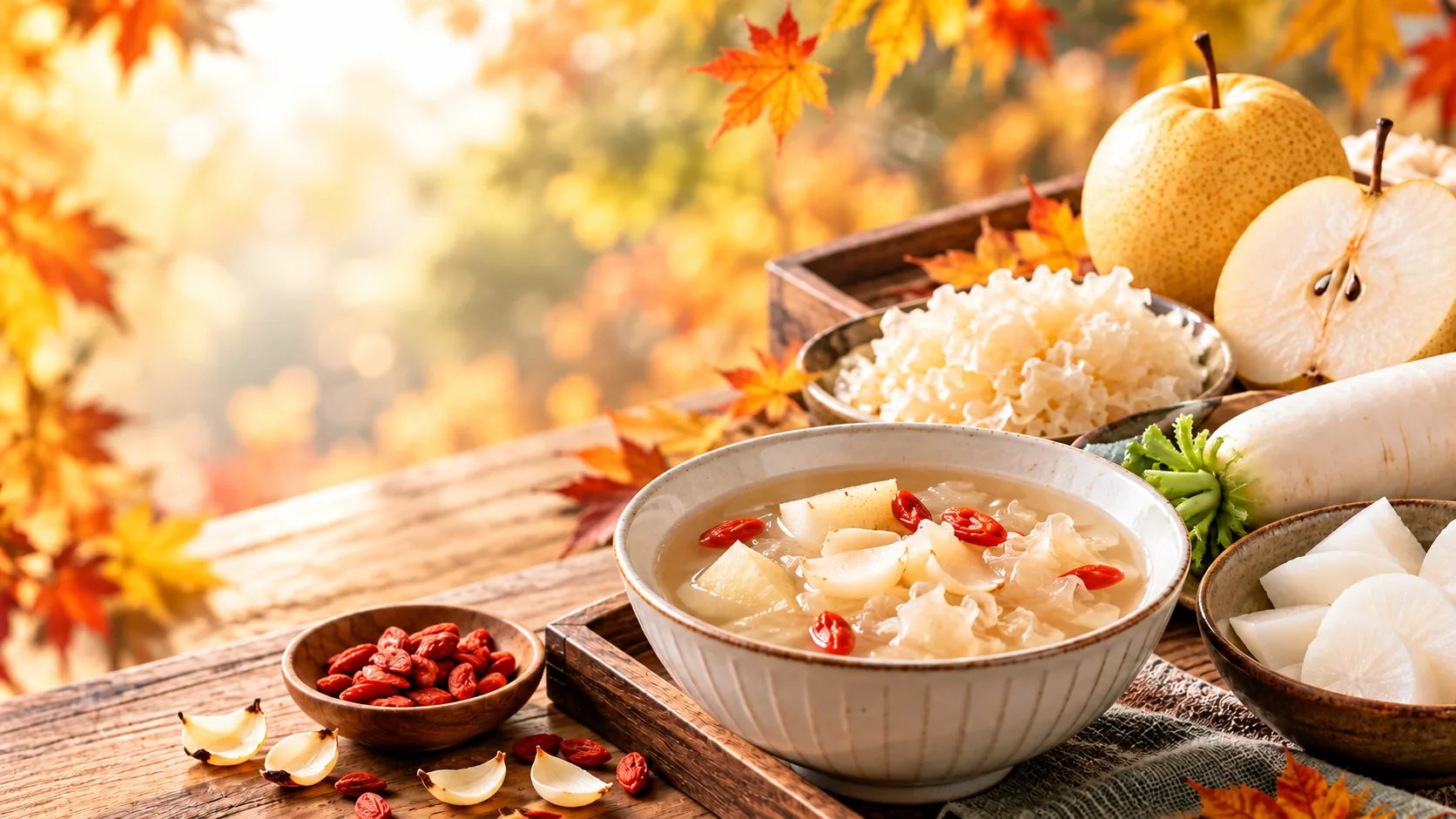
2. Lily Bulb and Snow Fungus Soup
Ingredients: About 38 g (1 tael) of lotus seeds, about 19 g (5 qian) of dried lily bulb, 1 snow fungus (white wood ear), and rock sugar to taste.
Method: Rinse the lotus seeds, lily bulb and snow fungus and soak until soft. Put them in a soup pot with enough water and cook until tender, then add rock sugar to taste. Simmer the soup for a long time so the gelatinous texture of the snow fungus dissolves into the broth.
Lily bulb and snow fungus soup moistens the lungs and is excellent for protecting the lungs and helping to prevent colds.
3. Steamed Pear With Rock Sugar
Ingredients: 1 Asian pear, 20 g rock sugar, 5 g fritillaria bulb (chuan bei), 2.5 g apricot kernel.
Method: Cut the pear in half and scoop out the core. Fill it with the rock sugar, fritillaria and apricot kernel, then steam for 40 to 50 minutes.
Steamed pear with rock sugar is very helpful for coughs with phlegm. Rock sugar itself helps resolve phlegm and moisten the lungs, and fritillaria and apricot kernel enhance this effect. Research has found that pears can ease respiratory symptoms. They moisten the lungs, relieve coughs, resolve phlegm and clear heat. However, pears are cooling in nature, so people with a cold, weak constitution should not eat too many. People with lots of internal heat or a dry constitution, and those prone to nosebleeds in early autumn because of dry nasal passages, can also enjoy steamed pear with rock sugar.
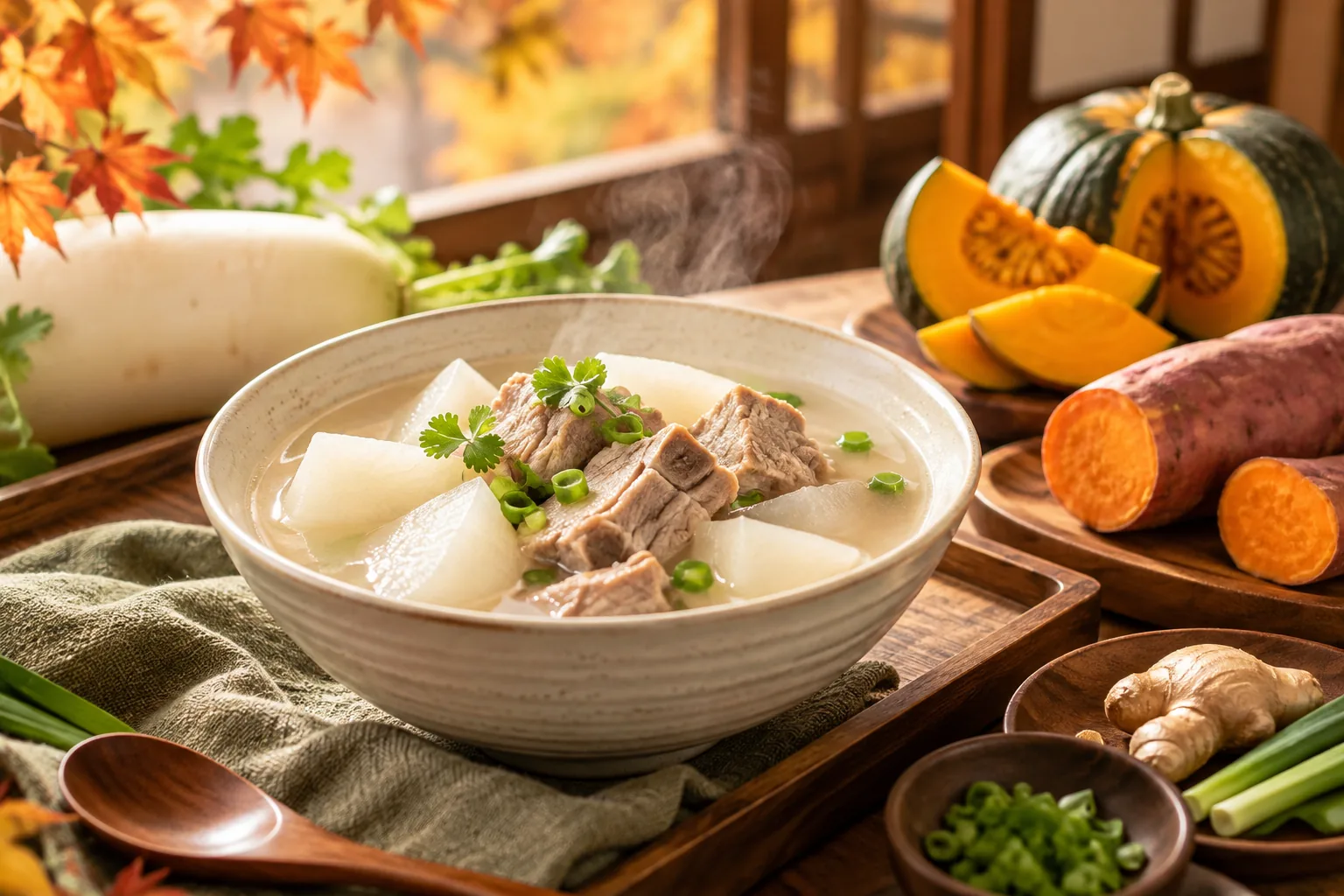
4. Lily Bulb and Chinese Yam Pork Rib Soup
Ingredients: About 600 g pork ribs, about half a Japanese mountain yam (about 300 g), about 20 g dried lily bulb, 1200 ml water, 300 ml rice wine, 1 ear of corn, and a few goji berries.
Method: Put the pork ribs, yam, dried lily bulb, water, rice wine, corn and goji berries in a pot. Bring to a boil over high heat, then reduce to medium-low and simmer for about 20–30 minutes until cooked through. Season with salt before serving.
After the start of autumn, the focus is on nourishing the yin of the lungs and stomach, and Chinese yam does both. Lily bulb and Chinese yam pork rib soup is a good way to nourish the body, but because yam is a starchy food, people trying to lose weight should watch how much they eat.
5. Fresh Lotus Root Juice
Ingredients: Fresh lotus root, honey to taste, cooled boiled water.
Method: Wash and peel fresh lotus root and cut it into small pieces. Put it in a juicer with some cooled boiled water and extract the juice. Strain out the pulp, add honey and drink.
Autumn is when fresh lotus root comes into season. Fresh lotus root juice with honey clears heat, generates fluids, cools the blood and helps stop bleeding, making it well suited to people with lots of internal heat and a dry mouth and tongue. Note, however, that raw lotus root is cold in nature, so people with a cold, weak digestive system or who get diarrhea easily should not drink too much. When lotus root is cooked, its nature shifts from cold to warm, and it strengthens the spleen and stomach and replenishes qi and blood.
3. Everyday Autumn Wellness Options for Busy People
Modern life moves fast, and not everyone can get enough balanced nutrition from their daily diet. As a result, herbal dietary supplements are drawing more attention. For example, Herbtail GlucoMetabol, which has become popular in recent years, combines a variety of herbal ingredients for daily health maintenance. Please note, however, that Herbtail GlucoMetabol is a dietary supplement. It cannot replace medical treatment and should only be used as a supplement to your diet.
Conclusion: Make the Most of Autumn to Nourish Your Lungs
Autumn is a great season for nourishing the lungs. Simple food therapy such as rice water, lily bulb and snow fungus soup, steamed pear with rock sugar, or lily bulb and Chinese yam pork rib soup can not only ease the discomfort of autumn dryness but also give your body energy. Combined with good daily habits and moderate use of modern herbal supplements, these can help your body adapt to the changing season and stay healthy and energetic.