
High Blood Sugar Is Like Soaking Your Blood Vessels in Sugar Water: Where Does the Damage Begin? | Chairman Chen Chang-Hung on Metabolic Health EP05
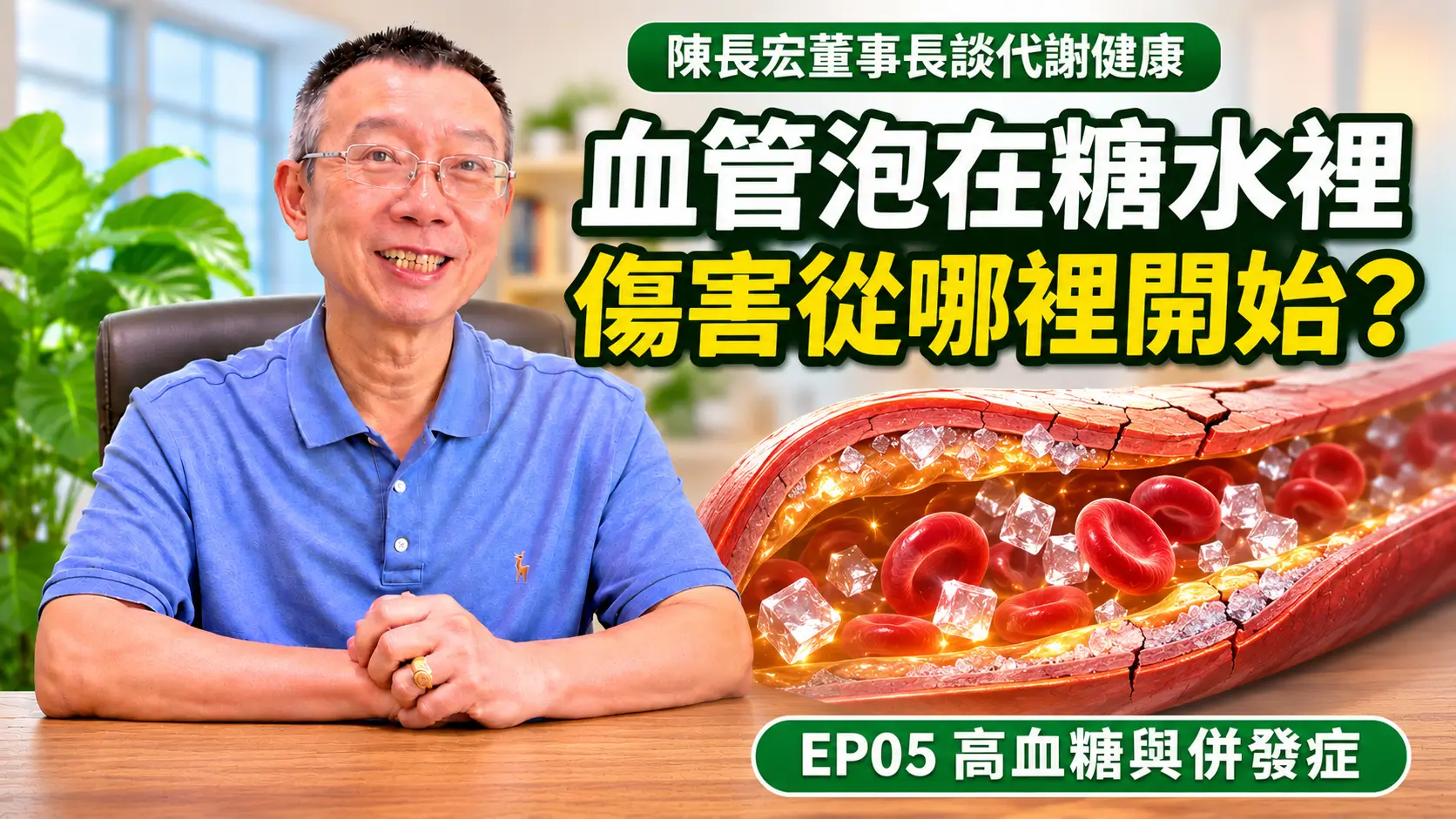
Excess sugar sticks to the collagen in blood vessel walls, making them stiff, thin and brittle, which is the source of diabetes complications.
People often say, “High blood sugar is like soaking your blood vessels in sugar water.” What does that really mean? When blood sugar runs a little high, what is actually being harmed? In this episode, Chen Chang-Hung, developer of Herbtail GlucoMetabol and chairman of Landmacy Healthcare Tech Company, starts with the role of glucose and explains how high blood sugar gradually affects the blood vessels throughout the body.
Glucose: An Important Source of Energy for the Body
Glucose is, at its core, a very important source of energy for the body. It enters the mitochondria inside cells, combines with oxygen, and ultimately produces ATP, which is converted into energy the body can use.
But too much of a good thing becomes a problem. In just the right amount, glucose is energy; in excess, it becomes trouble.
Too Much Sugar Sticks to Proteins and Blood Vessel Walls
When there is so much sugar in the blood that the body cannot use it all, and even insulin cannot carry it into tissue cells or muscle, the excess sugar sticks to the body’s proteins, including collagen, as well as to blood vessel walls.
Glycated Hemoglobin: Reflecting Blood Sugar Over About Three Months
This phenomenon of “sugar sticking to proteins” is exactly the principle behind glycated hemoglobin (HbA1c). Sugar binds to the hemoglobin in red blood cells, and red blood cells live for about 120 days, so glycated hemoglobin reflects average blood sugar over roughly the past three months.
By comparison, post-meal blood sugar rises and falls depending on what you eat at each meal, and fasting blood sugar before a meal is only a number from a single point in time. That is why glycated hemoglobin is better at showing whether blood sugar has been stable over a period of time.
Blood Vessels Become Stiff, Thin and Brittle
When too much sugar sticks to the collagen in blood vessel walls, the walls become stiff, thin and brittle, and the risk becomes very high. The effects are not limited to large blood vessels; the tiny capillaries throughout the body are also greatly affected.

Wherever There Are Blood Vessels, Damage Can Occur
Anywhere in the body that has blood vessels and capillaries can be harmed:
- Hands and feet: For example, a wound on the tip of a toe may not heal easily.
- The brain: The blood vessels in the brain are affected in the same way.
- The heart and other organs: Many organs may develop complications as a result.
Chairman Chen reminds us that what diabetes patients fear most is complications, and the source of those complications is blood vessels being soaked for a long time in sugar at too high a concentration.
Key Takeaways from This Episode
- Glucose is an important source of energy for the body, producing ATP in the mitochondria.
- When there is too much sugar, it sticks to proteins, collagen and blood vessel walls.
- Glycated hemoglobin reflects average blood sugar over the past three months and is more stable than a single blood sugar reading.
- Excess sugar makes blood vessels stiff, thin and brittle, affecting everything from large vessels to capillaries.
- What diabetes patients fear most is complications, and their source is in the blood vessels.
Video Series | Chairman Chen Chang-Hung on Metabolic Health
This series has 13 episodes in total; this is Episode 5.
- EP01 Why Can’t You Keep Eating Aloe to Lower Blood Sugar? Eastern Balance × Western Science
- EP02 Is Normal Blood Sugar Always Fine? Insulin Resistance Harms Six Major Organs
- EP03 Can You Get the “Three Highs” Without Gaining Weight? Refined Starch Is a Dietary Landmine
- EP04 The “Three Highs” in Your 20s and 30s? Staying Up Late Makes One Day Do the Work of Two
- EP05 High Blood Sugar Is Like Soaking Your Blood Vessels in Sugar Water: Where Does the Damage Begin? (this post)
More videos will be released in the coming weeks. Subscribe to our YouTube channel or keep following the Healthcare 520 website.
※ This article and video are for sharing health knowledge and cannot replace professional medical advice. If you feel unwell in any way, or if a wound is slow to heal, please seek medical care promptly.