Dry Throat From Autumn Dryness? 5 Small Habits for Autumn Wellness
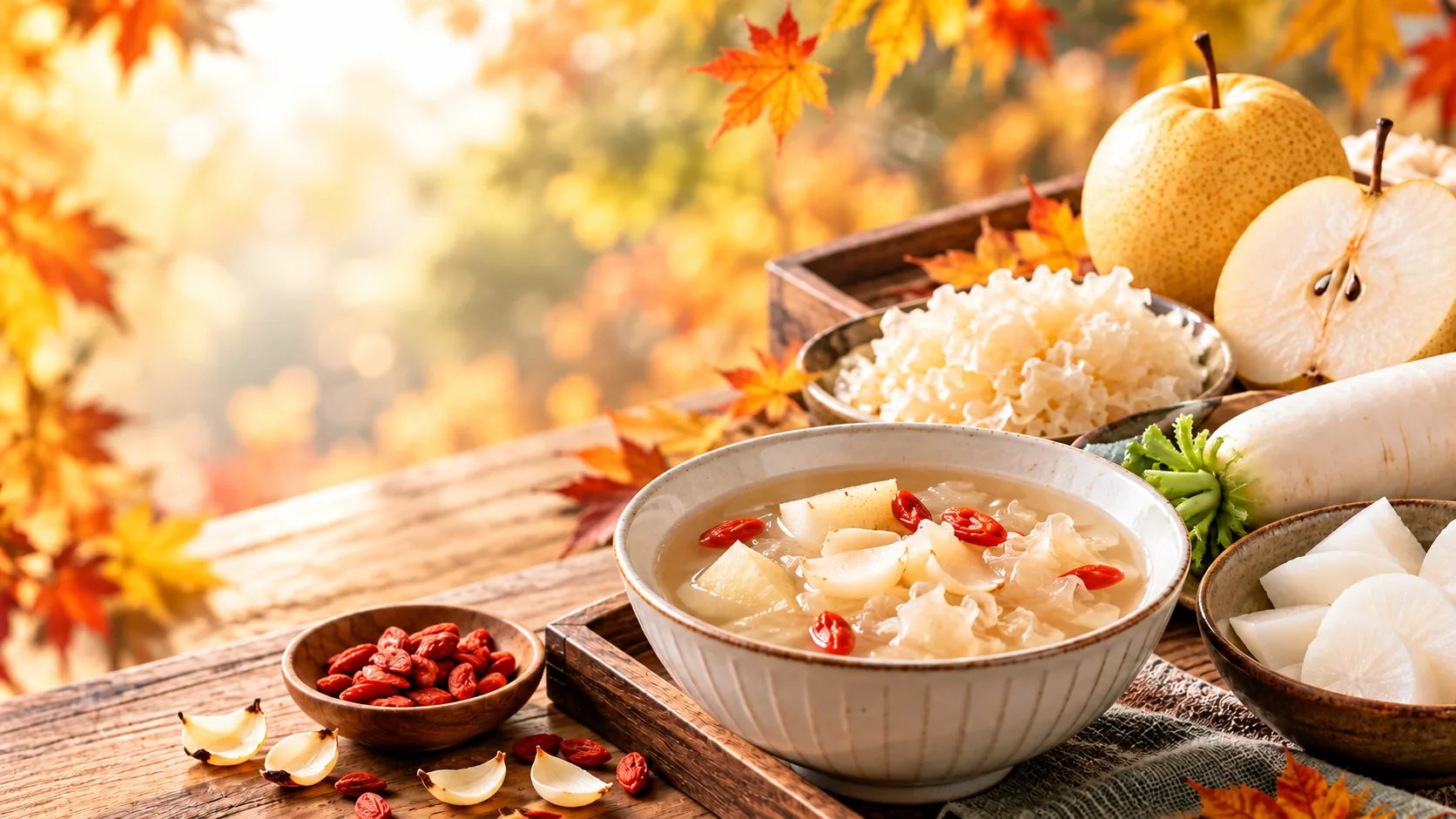
Pear, snow fungus and lily bulb soup is a classic home remedy for soothing autumn dryness.
Once October arrives, the morning and evening breeze changes. Around this time, many people wake up with a dry, itchy throat, feel their face tighten uncomfortably after washing, and sometimes cough a couple of dry coughs for no reason, thinking they’re coming down with a cold.
A Dry Throat and Dry Cough May Be Autumn Dryness
It isn’t necessarily a cold. If there’s no fever and no runny nose, just dryness, itching and a cough that doesn’t bring up much phlegm, it’s autumn dryness. Traditional Chinese Medicine (TCM) says that “dryness easily harms the lungs.” When the air gets dry, the body’s fluids are depleted too, and the throat, nose, lips and skin dry out one after another. For some people, even bowel movements become less smooth.
Autumn dryness also comes in early and late forms. Early in autumn, it still carries summer’s warmth and is called “warm dryness,” making people prone to thirst and sore throats. Later, as the weather turns cold, it becomes “cool dryness,” with more sensitivity to cold, nasal congestion and dry coughs. Early October touches on both, so foods that are too cooling or too rich aren’t ideal right now.
What to Eat for Autumn Dryness: Starting With a Pot of Daikon Radish
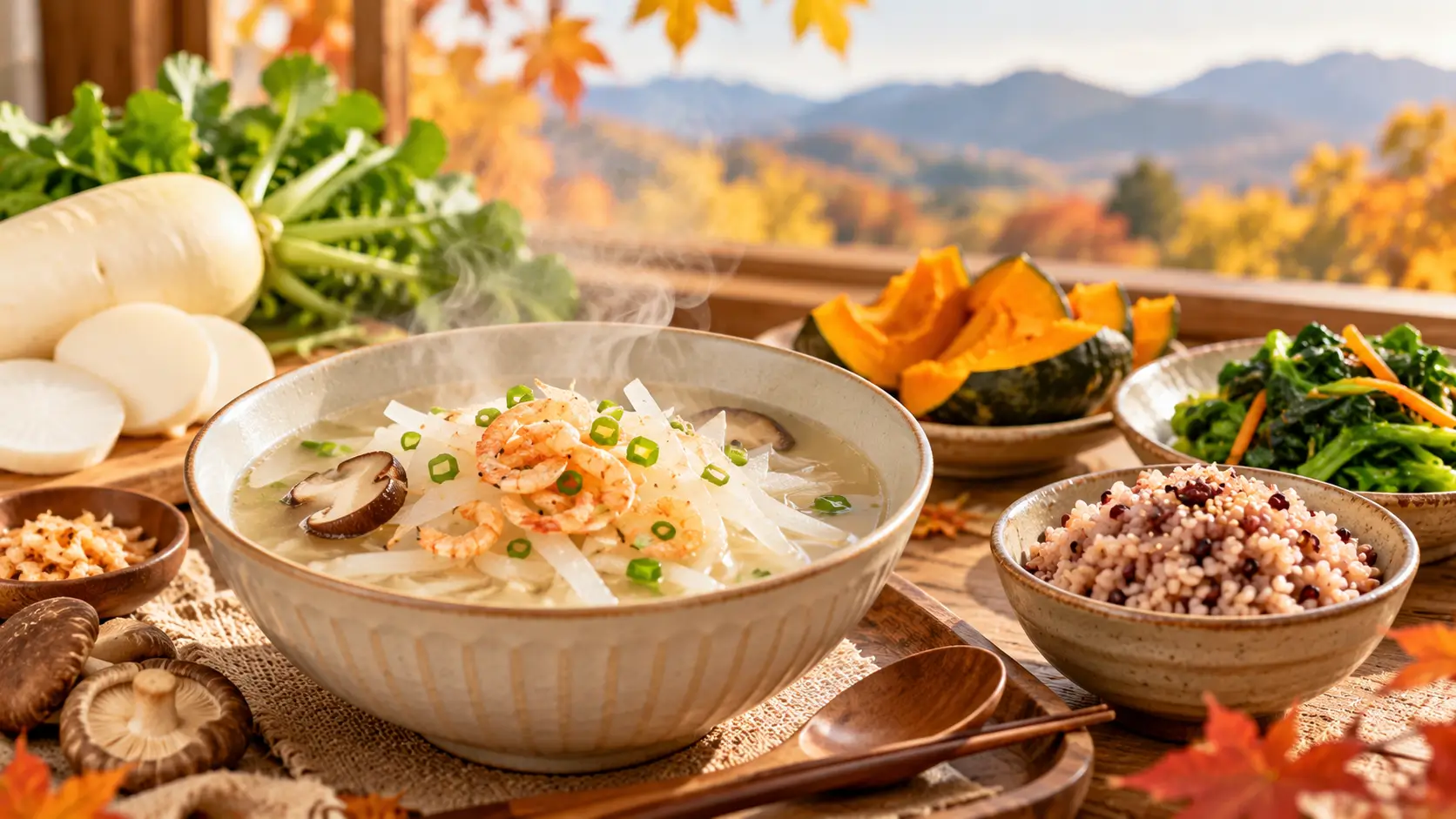
My family’s autumn table isn’t fancy; we often just simmer a pot of daikon radish. The older members of my family have weaker respiratory systems, and after doing some reading, I learned that in TCM, daikon is a food that helps move qi and resolve phlegm. Once it’s cooked, its nature becomes gentler and it’s easy on the stomach. Sometimes I add a small piece of tangerine peel for extra aroma. However, tangerine peel is warm and drying, so it’s better for coughs with phlegm. If you have a dry, itchy throat and a cough without phlegm, just use a small piece or leave it out.

5 Small Habits for Autumn Wellness
I’ve put together five things, all of which are easy to do every day.
Go to Bed Earlier to Conserve Body Fluids
First, go to bed earlier. The Huangdi Neijing (The Yellow Emperor’s Classic of Internal Medicine) says that in autumn we should “go to bed early and rise early, rising with the rooster.” As it gets dark earlier each day, we should rest earlier too. Staying up late depletes body fluids the most; after a late night, your throat is usually even drier the next day.
Eat More Moistening Foods: Pears, Lily Bulb, Snow Fungus, Chinese Yam and Lotus Root
Second, add moisture to your meals. When it comes to what to eat for autumn dryness, the older generation always comes back to the same few foods: pears, lily bulb, snow fungus, Chinese yam and lotus root.
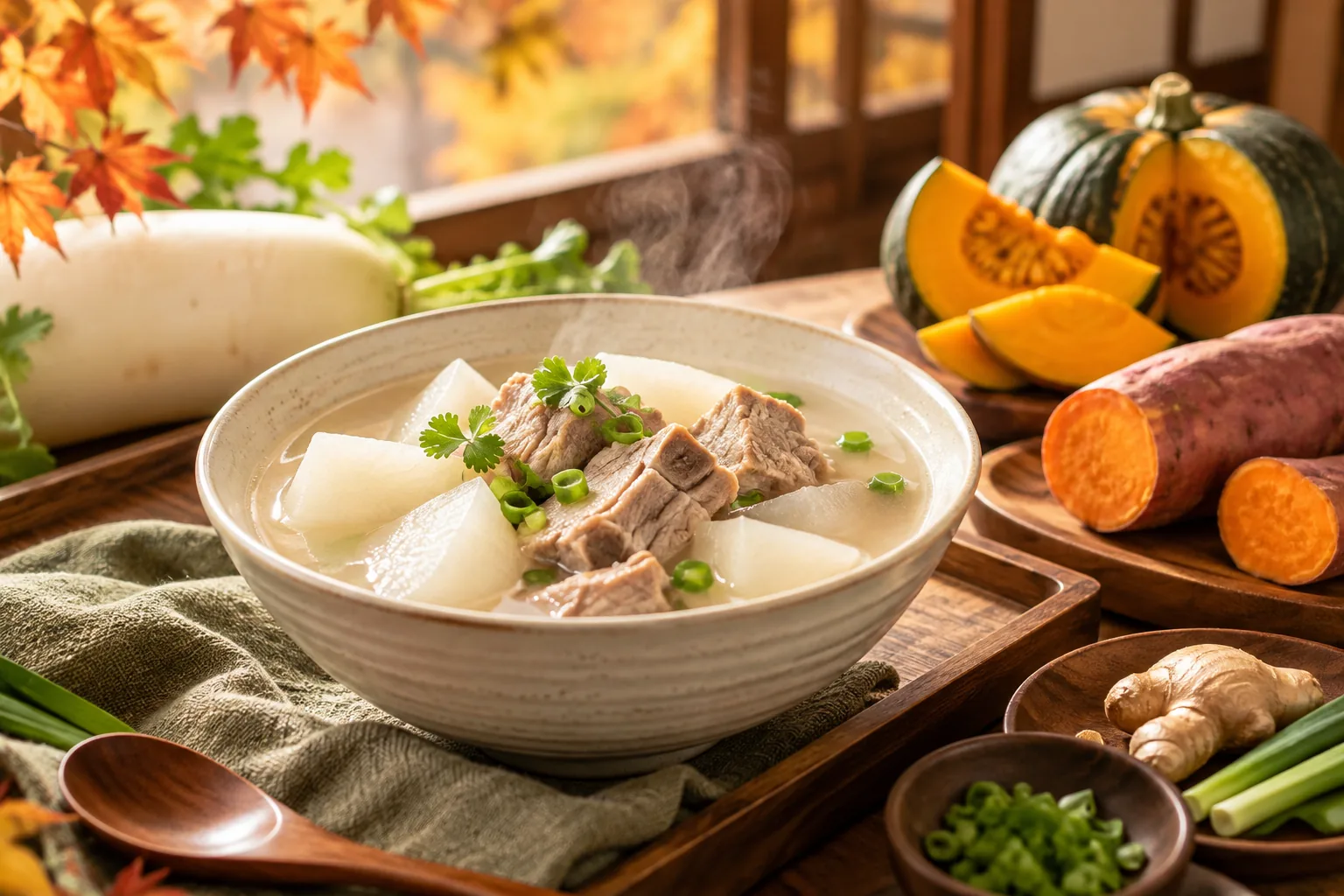
Pears generate fluids and feel wonderful when your throat is dry. But pears are cooling, so if you have a weak stomach and get diarrhea from cold foods, cook them first. You don’t need to eat them every day; two or three times a week is enough. Lily bulb clears the heart and moistens the lungs; toss a handful into congee for a touch of sweetness. Snow fungus needs to simmer until it turns gelatinous to taste its best, and that silky texture is where its yin-nourishing, moistening power lies, which is why it’s called “the common people’s bird’s nest.” Chinese yam supports the spleen and nourishes the lungs and is mild in nature. Appetites run high in autumn and it’s easy to overeat, so yam is a good way to give your digestion a break. Lotus root differs raw and cooked: raw, it’s cooling, clearing heat and generating fluids; cooked, it becomes warming, strengthening the spleen and whetting the appetite, and it’s great simmered with pork ribs.
Cut Back on Spicy, Fried Food and Iced Drinks
Third, show some restraint at the table. As soon as the weather cools, invitations to hot pot and barbecue multiply. An occasional indulgence is fine, but too much spicy and fried food only makes a dry mouth and tongue worse. It’s also time to stop the iced drinks; drinking one cold drink after another in autumn is hard on both your lungs and your stomach.
Sip Water Slowly and Keep Indoor Air Humid
Fourth, drink water the right way. Gulping down a big glass all at once doesn’t do much, as your body can’t hold on to it. Carry an insulated bottle and take a few sips whenever you think of it; that works better. When the heat or air conditioning is on at home, the air gets even drier. A humidifier or even a bowl of water in the room can help with dry skin.
Don’t Overdo “Autumn Cooling”: Keep Your Neck, Belly and Feet Warm
Fifth, don’t overdo “staying cool in autumn.” The saying “bundle up in spring, stay a bit cool in autumn” means dressing a little lighter in autumn to let your body gradually adapt to the cold. The idea is sound, but with such big temperature swings between day and night, you still need to keep your neck, belly and feet covered. If you have older adults or young children at home, or if your own constitution is weak, don’t tough it out.
How to Make a Lung-Moistening Soup: Pear, Snow Fungus and Lily Bulb Soup
When it comes to lung-moistening soups, many families simmer pear, snow fungus and lily bulb soup in autumn. It isn’t hard to make; it just takes a little patience.
Soak one dried snow fungus until it softens, trim off the yellowish hard base and tear it into small pieces. Add about 1000 ml of water and simmer over low heat for about an hour, until the soup begins to thicken. Wash one Asian pear; there’s no need to peel it, as the skin also moistens the lungs. Cut it into chunks with the skin on, add it to the pot along with softened dried lily bulb, and simmer for another 20 minutes. Add a small handful of goji berries in the last five minutes; adding them too early makes them mushy and sour. The pear is sweet on its own, so the soup is delicious without sugar, but if you like it sweeter, add a few pieces of rock sugar. The lung-moistening “sweet soups” Cantonese people talk about taste something like this.
Time-Saving Version: Steamed Pear With Rock Sugar
If you’re tired after work and don’t want to simmer for so long, steamed pear with rock sugar is even easier: core an Asian pear, cut it into chunks, put it in a bowl with a few pieces of rock sugar, and steam it for half an hour. If your blood sugar runs high, use less sugar.
How Long Can a Dry Cough From Autumn Dryness Last Before You Should See a Doctor?
One last word. A cough from autumn dryness is usually dry, with little phlegm. If it hasn’t improved after two weeks, if you’re coughing up more phlegm that’s yellow or green, or if you develop a fever, autumn dryness no longer explains it, and you should see a doctor.
Take good care of your lungs in autumn, and winter will be easier. This weekend, simmer a pot of soup for your family.