Eat Right in Autumn, Get Sick Less in Winter? Eating for a Dry Autumn Throat, Plus Daikon and Dried Shrimp Soup
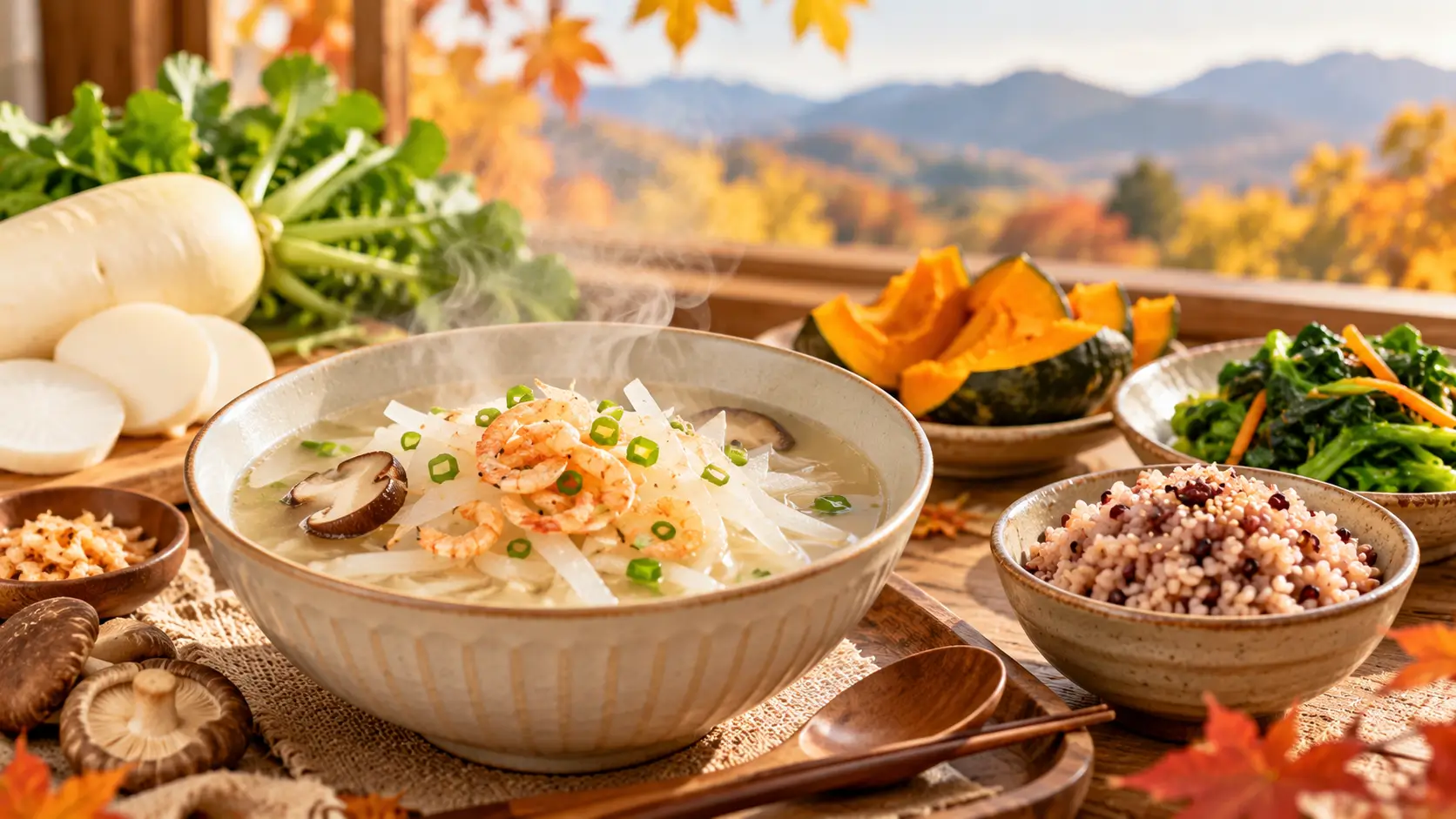
An autumn wellness table at home: daikon, dried shrimp and shiitake soup, mixed-grain rice, pumpkin and dark leafy greens.
Do you wake up with a dry throat and a feeling of phlegm stuck there that’s hard to cough up? After autumn arrives, the weather gradually cools and the air can turn dry. Many people find their throat especially uncomfortable in the morning, feeling tight until they’ve had some water.
There’s a traditional wellness saying: “Moisten in autumn, tonify in winter.” It reminds us that as the seasons change, we can adjust how we eat. Rather than rushing to take tonics as soon as autumn begins, start by getting enough fluids, eating a balanced diet and enjoying light, home-style soups.
Why Does Your Throat Feel Dry Yet Phlegmy in Autumn?
From a Traditional Chinese Medicine (TCM) perspective, dryness is strong in autumn, which can lead to a dry mouth and nose and throat discomfort. Some traditional descriptions call this “autumn dryness” or “dry phlegm.”
From the standpoint of modern physiology, the airways are lined with a layer of mucus that helps trap dust and other particles, which are then cleared away by the movement of tiny hair-like cilia. When the environment is dry, when you don’t drink enough water, or with factors such as allergies or infections, some people may feel a dry throat, thick secretions or a sensation of phlegm.
However, a dry throat with phlegm isn’t necessarily caused by autumn dryness. It may also be related to postnasal drip, acid reflux, allergies or a respiratory infection. If symptoms persist or keep coming back, it’s worth finding out the cause.
Moisten in Autumn, Tonify in Winter: Start With Your Daily Diet
“Moisten in autumn, tonify in winter” is a traditional seasonal wellness idea. To use a gardening analogy: when the soil is dry, you first water it appropriately, then fertilize according to what the plant needs, rather than just adding more and more fertilizer.

Applied to daily eating, this means first making sure you’re getting enough fluids, enough vegetables and fruit, and balanced meals, then planning any tonics based on your own health.
So there’s no need to rush into eating rich lamb stew or ginger duck every day in autumn. Light, well-balanced home cooking can be just as much a part of autumn eating.
A Home-Style Autumn Soup: Daikon and Dried Shrimp Soup
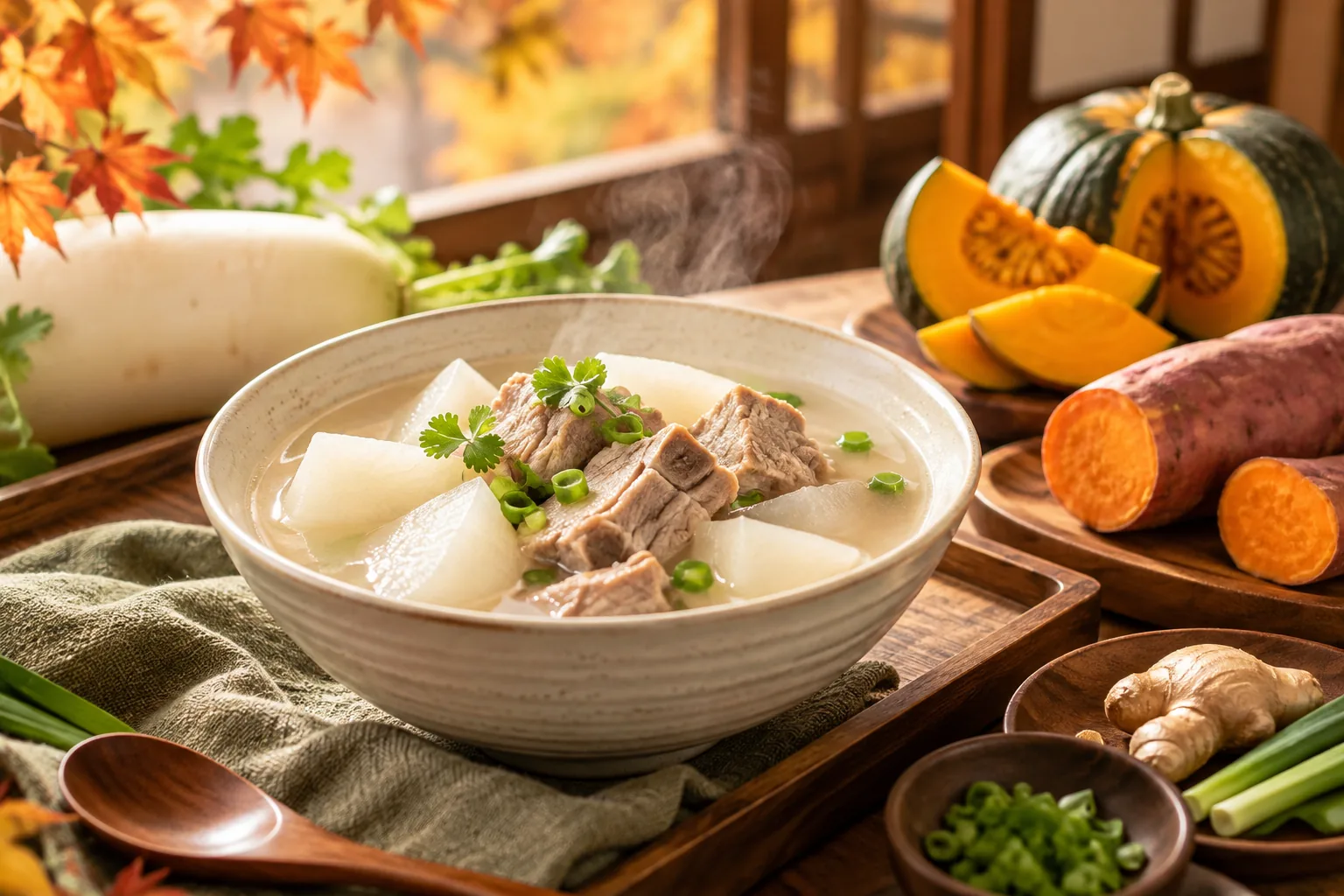
Once autumn arrives, daikon and pork rib soup or daikon and dried shrimp soup often appears on our family’s table. These soups are simple to make, use easy-to-find ingredients and pair well with other home-style dishes.
Ingredients for Daikon and Dried Shrimp Soup
- Daikon radish, as needed
- A small pinch of dried shrimp
- A little cooking oil
- Water, as needed
- A little salt, to taste
- Optional: a few shiitake mushrooms
Simple Steps for Daikon and Dried Shrimp Soup
- Wash and peel the daikon, then cut it into thin strips or slices.
- Rinse the dried shrimp briefly and drain.
- Heat a little oil in a pot and stir-fry the dried shrimp until fragrant.
- Add the daikon and enough water, and cook until the daikon is soft and translucent.
- For extra flavor, add shiitake mushrooms and simmer together.
- Taste before serving, then decide whether to add salt, so the soup doesn’t end up too salty.
A pot of light daikon and dried shrimp soup adds vegetables, fluids and a variety of nutrients to your table. If you have high blood pressure, need to limit sodium or are allergic to shrimp, adjust the ingredients and seasoning accordingly.
What Nutrients Does Daikon and Dried Shrimp Soup Offer?
1. Daikon: Water, Dietary Fiber and Vitamin C
Daikon contains water, dietary fiber and vitamin C, making it a good everyday vegetable. In traditional food culture, daikon is also often associated with wellness ideas such as moving qi and resolving phlegm.
Keep in mind, though, that daikon is an everyday food and cannot replace a medical evaluation for a persistent cough, a lot of phlegm or other respiratory symptoms.
2. Dried Shrimp: A Source of Protein and Calcium
Even in small amounts, dried shrimp adds flavor to a dish and provides some protein and minerals. The nutritional makeup of shrimp and shrimp products varies with the species and processing method, and the actual amount you get depends on how much you use.
Protein is an important nutrient for maintaining and repairing body tissues. In your daily diet, get enough protein from a variety of foods such as fish, eggs, beans and meat, rather than relying on a small amount of dried shrimp.
3. A Moderate Amount of Fat: An Essential Part of a Balanced Diet
Adding a little suitable cooking oil not only boosts aroma but also provides fat. Fat is an essential nutrient and helps the body absorb fat-soluble vitamins.
For everyday cooking, choose a plant oil that suits your needs and keep an eye on your overall fat intake.
Pair It With Mixed-Grain Rice, Pumpkin and Dark Leafy Greens for Better Balance
A meal’s nutrition doesn’t have to come from a single bowl of soup. Combining different kinds of foods makes it easier to get a wide range of nutrients.
Mixed-Grain Rice: Carbohydrates and Dietary Fiber
Brown rice, oats and other whole grains provide carbohydrates, dietary fiber and many other nutrients. Compared with refined grains, intact whole grains usually contain more dietary fiber, which helps build a balanced diet.
Pumpkin and Dark Leafy Greens: Vitamins and Minerals
Pumpkin contains carotenoids, some of which the body can convert into vitamin A. Vitamin A is important for normal vision, immune function and the maintenance of epithelial tissue.
Dark leafy greens provide folate, vitamin K and, depending on the vegetable, nutrients such as calcium, iron and magnesium. Rotating vegetables of different colors each day helps diversify your nutrition more than relying on any single food.
Shiitake Mushrooms: Adding Variety
Shiitake mushrooms add savory flavor to soups and provide dietary fiber and some micronutrients. Some mushrooms may contain more vitamin D after exposure to ultraviolet light, but how much depends on the variety, handling and light conditions, so you can’t assume that simply leaving them on a windowsill will cover your vitamin D needs.
If you’re concerned about getting enough vitamin D, work with a healthcare professional to consider suitable food sources or whether further testing is needed, based on your diet and health.
The Key to Autumn Wellness: Balance, Not Big Tonics
A home-cooked meal can provide many of the nutrients your body needs through a variety of foods:
- Vegetables: provide dietary fiber, vitamins and minerals.
- Whole grains: provide carbohydrates and dietary fiber.
- Protein foods: support the maintenance and repair of body tissues.
- A moderate amount of fat: provides essential fatty acids and helps absorb fat-soluble vitamins.
- Enough fluids: help maintain normal body functions.
Rather than expecting one particular soup to prevent colds, focus on long-term balanced eating, regular sleep, moderate activity and good hygiene habits. These everyday practices help maintain overall health, but they can’t guarantee you won’t get sick in winter.
When Shouldn’t You Rely on Diet Alone?
If a dry throat, phlegm or cough hasn’t improved after two to three weeks, see a doctor. If you develop warning signs such as difficulty breathing, chest pain, coughing up blood, marked difficulty swallowing or a persistent high fever, seek medical care promptly.
If you have a chronic condition, need to limit sodium or other nutrients, are taking medication, or are allergic to shrimp or other foods, consult a doctor or dietitian before changing your diet.
Conclusion: Care for Your Autumn and Winter Health, Starting With a Bowl of Home-Style Soup
“Moisten in autumn, tonify in winter” reminds us that wellness doesn’t have to start with expensive or complicated methods. As the seasons change, you can begin by drinking enough fluids, choosing a variety of foods, keeping a regular routine and eating a balanced diet.
A bowl of daikon and dried shrimp soup with mixed-grain rice, pumpkin or dark leafy greens makes a simple, easy home-style meal.
Healthcare 520 will continue sharing seasonal wellness, nutrition knowledge and everyday health management tips to help you build a steadier, healthier life, starting with your daily food choices.
Health reminder: This article is for general health education and dietary reference only and does not constitute a medical diagnosis or treatment recommendation. Food cannot replace necessary medical care; if you have persistent or severe symptoms, please seek help from a qualified healthcare professional.