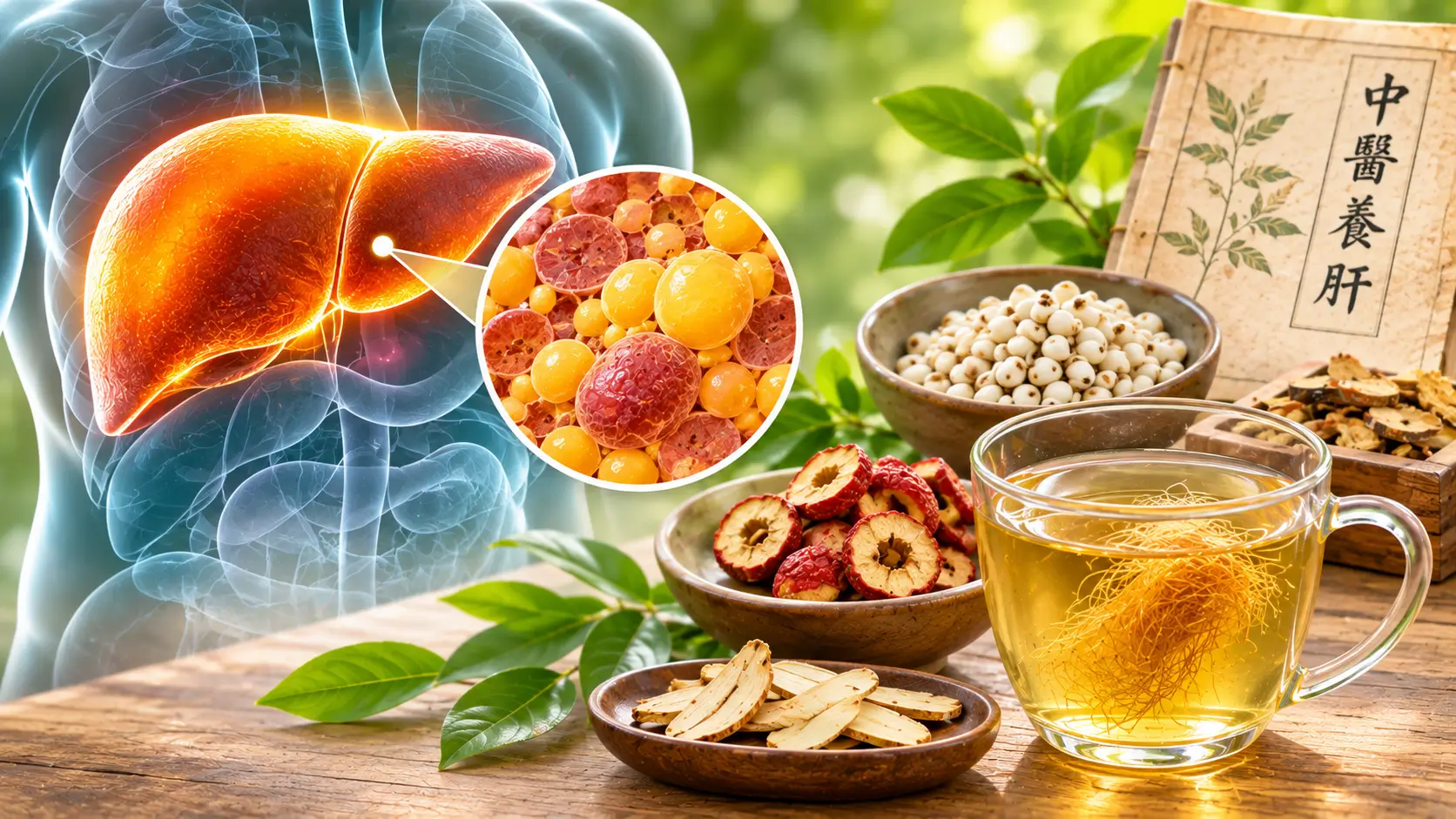
Wellness for the End of Heat (Chushu): Easing Into Autumn as Summer Heat Fades and Dryness Begins
The End of Heat marks the point where summer heat turns back; mornings and evenings cool, and the air grows drier day by day.
August 23 marks the start of the End of Heat (Chushu). It is one of the few solar terms among the 24 named for “stopping.” It’s not that the weather suddenly turns cool; rather, the trend of summer heat turns back at this point. The sun is still strong afterward, but mornings and evenings begin to cool, and the moisture in the air thins day by day. The body is most likely to have problems during this kind of “not quite finished turning” period.
How Does TCM View the End of Heat?
The Collected Explanations of the Seventy-Two Pentads of the Monthly Ordinances explains Chushu this way: “Chu means to stop; the summer heat stops here.” “Chu” means coming to rest and being stored away, not disappearing. When Traditional Chinese Medicine (TCM) looks at the solar terms, it looks not at temperature readings but at the direction of qi. After the summer solstice, yang energy has already begun to draw back, and by the End of Heat, the body truly feels this “gathering in.”
The Suwen (Basic Questions), in its “Great Treatise on Regulating the Spirit According to the Four Seasons,” says of the three months of autumn: “This is called the period of contentment and balance. The heavenly qi becomes brisk and the earthly qi becomes clear… gather in the spirit and qi to make the autumn qi calm… This is the response to autumn qi, the way of nourishing the gathering-in.” The key phrase is “nourishing the gathering-in.” Spring and summer nourish growth and expansion; autumn and winter nourish gathering and storage. Following the natural way during this solar term means something very specific: not spending more energy, and not rushing to take big tonics, but drawing back the energy that has been flowing outward.
What makes the End of Heat special is that it is a “layered” solar term. Summer’s dampness hasn’t fully cleared, but autumn’s dryness is already on its way; the day’s lingering heat remains, but the night’s coolness has already arrived. Two opposing kinds of qi are present at once, which is why this solar term is more likely to throw the body off than others.

Three Common Patterns Around the End of Heat
In TCM clinical practice, three states are most common around the End of Heat, and they often appear together:
Spleen deficiency with dampness. The bill for a whole summer of cold drinks, ice treats and melons comes due now. Signs include poor appetite, bloating after meals, soft or unformed stools, a heavy body and a thick, greasy tongue coating. As yang energy turns inward, the spleen’s yang is already less abundant than in high summer, so these symptoms become even more noticeable.
Deficiency of qi and yin (commonly called “autumn fatigue”). Heavy summer sweating depletes both qi and fluids. By the End of Heat, as the body shifts from heightened activity to settling down, the deficit shows itself: daytime drowsiness, lack of drive, tiring with the slightest effort, and running out of breath when talking a lot. This isn’t laziness; it’s your body asking you to slow down.
Early warm dryness. Dryness harms the lungs. Signs include a dry mouth and throat on waking, a dry, itchy nose, a dry cough with little phlegm, flaky lips and skin, and dry stools. Because the dryness of the End of Heat still carries summer’s lingering warmth, it is “warm dryness,” which calls for a different approach than the “cool dryness” of late autumn.
In addition, as the difference between day and night temperatures widens, people with weak surface defenses (who catch colds easily or sweat at the slightest exertion) are especially prone to catching a chill, and old respiratory complaints often flare up at this time.
Everyday Ways to Go With the Season During the End of Heat
Diet: Take Care of Your Digestion First, Then Think About Tonics.
The most common mistake at the End of Heat is rushing to “put on autumn weight” with rich food. A digestive system that has just been battered by cold drinks all summer isn’t yet able to handle rich, heavy tonics, and most of what you eat will just turn into bloating. The right order is to strengthen the spleen and clear dampness first, then moisten, and only then tonify.
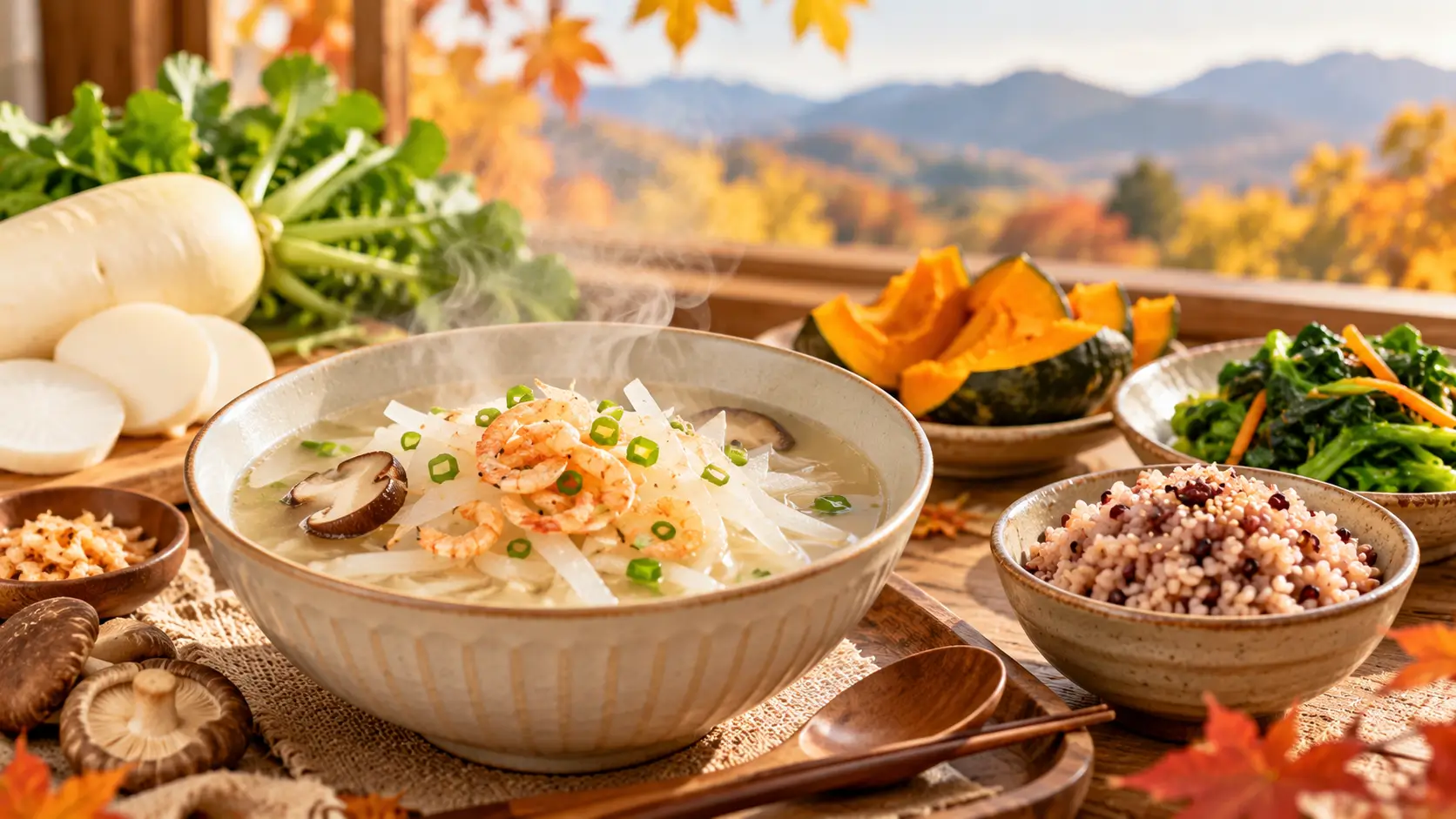
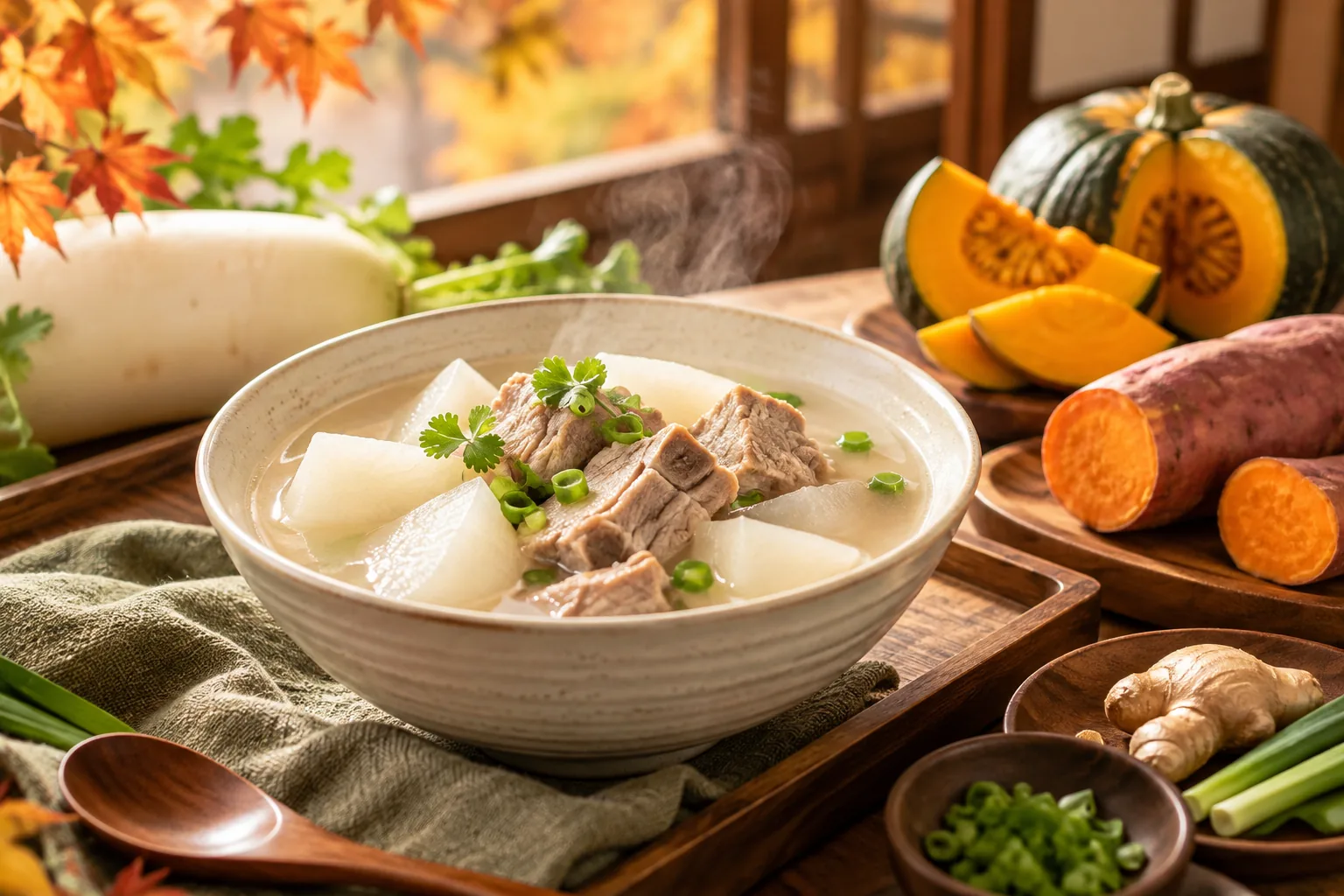
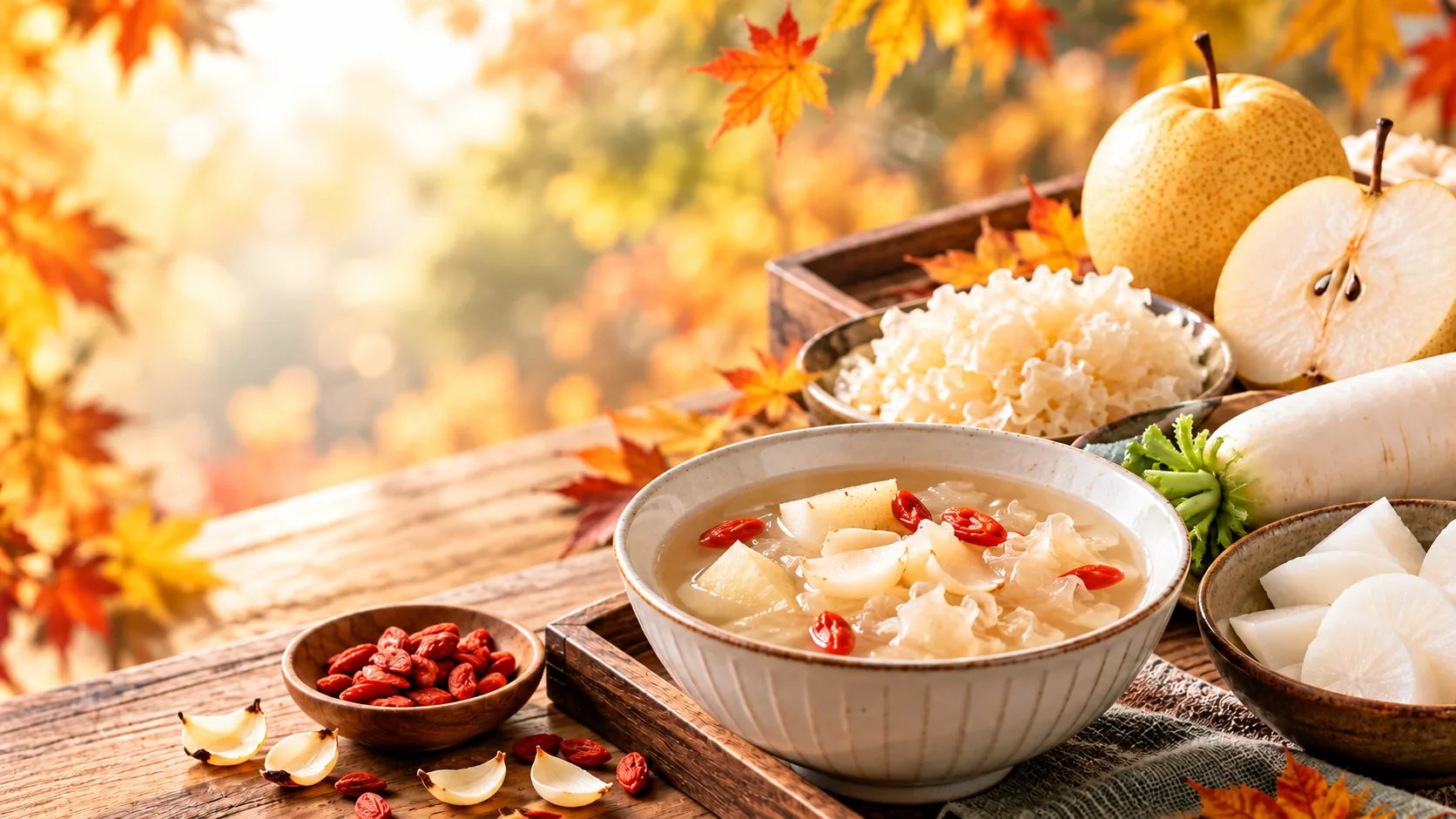
In practice: cut back on raw, cold melons and fruit, especially at night, and switch from iced drinks to warm ones; you’ll usually feel the difference within two or three days. Moistening foods should “moisten without being greasy”: lily bulb, snow fungus, pears, Chinese yam and lotus seeds are all good choices. Ease off spicy and barbecued foods. Sun Simiao’s Qianjin Yaofang (Essential Prescriptions Worth a Thousand Gold) advises that “in the seventy-two days of autumn, reduce pungent and increase sour.” Pungent flavors disperse, so they should be used sparingly in the season for gathering in.
Daily Routine: Add Sleep Back In, and Be Sensible About “Autumn Cooling.”
The Suwen says that in autumn we should “go to bed early and rise early, rising with the rooster.” Going to bed an hour earlier than in summer is the single most worthwhile thing you can do during this solar term. A 15- to 20-minute nap at midday is even better.
Turn the air conditioning up and don’t let it blow on you all night, especially not on your abdomen, neck or back. There’s a folk saying, “bundle up in spring, stay a bit cool in autumn,” meant to help the body gradually adapt to cooler weather, but it has limits: keep your abdomen, ankles and the back of your neck covered, and older adults, young children, and people with a cold, weak constitution or chronic illness should not deliberately expose themselves to cold. Choose gentle exercise, such as walking, stretching and gentle poses, just enough to break a light sweat. Sweating heavily goes against the grain of this solar term, as it depletes both fluids and qi.
Emotions: Autumn Brings Melancholy Easily, So “Keep the Mind Calm.”
The Suwen says that in autumn we should “keep the mind calm and peaceful to soften the harshness of autumn.” As nature turns austere, our mood tends to sink with it. This is a normal physiological rhythm, not a sign that something is wrong with you. What you can do: take a 20-minute walk outdoors in the late afternoon so your body can sense the changing natural light; cut back on stimulating information an hour before bed; and consciously leave more room in your schedule. Gathering in your spirit and energy essentially means not slamming on the gas in the season when you should be slowing down.
Herbs Related to the End of Heat: Chinese Yam, Tangerine Peel and Mulberry Leaf
The following three herbs correspond neatly to the three issues of the End of Heat: spleen deficiency, lingering dampness and early dryness.
Chinese yam (sweet, neutral; enters the spleen, lungs and kidneys)
Traditionally used to strengthen the spleen, benefit the lungs and tonify the kidneys. The Shennong Bencao Jing (Divine Farmer’s Classic of Materia Medica) lists it as a superior-grade herb. Mild in nature and both food and medicine, it works well in congee or soups and is a gentle choice for supporting digestion during this solar term.
Cautions: Not suitable for people with heavy dampness and fullness in the middle (marked bloating); people with diabetes should count it toward their starch intake.
Tangerine peel (chen pi) (pungent and bitter, warm; enters the spleen and lungs)
Traditionally used to regulate qi, strengthen the spleen, dry dampness and resolve phlegm. In the Bencao Gangmu (Compendium of Materia Medica), Li Shizhen says of tangerine peel: “Bitter can drain and dry, pungent can disperse, and warm can harmonize.” At the End of Heat, when summer dampness hasn’t cleared and spleen qi is sluggish, tangerine peel points in exactly the right direction. Add a small amount to congee or simmer it in water.
Cautions: Use with caution if you have qi deficiency or a dry cough due to yin deficiency.
Mulberry leaf (sweet and bitter, cold; enters the lungs and liver)
Traditionally used to disperse wind-heat and moisten the lungs. In the Wenbing Tiaobian (Systematic Differentiation of Warm Diseases), Wu Jutong used Sang Xing Tang (Mulberry Leaf and Apricot Kernel Decoction) for mild cases of warm dryness harming the lungs, with mulberry leaf as one of the main herbs, matching the warm dryness of the End of Heat.
Cautions: Use with caution if you have a cold, weak constitution; because it is cooling, people with a cold, weak digestive system or who get diarrhea easily should not take it long term.
As for modern research, all three herbs have been studied at the compound level (polysaccharides in Chinese yam, hesperidin and nobiletin in tangerine peel, and DNJ in mulberry leaf), but most of this research is in cells and animals, with only a few small human trials, which isn’t enough to draw conclusions about clinical effects. Traditional uses and modern research speak two different languages, and one shouldn’t be used to prop up the other.
Conclusion: End of Heat Wellness Is About Going With the Flow
The End of Heat really teaches one thing: nature has begun to gather in, so we should stop pushing so hard to spend ourselves. The way to health is first to go with the natural flow. It’s not about working twice as hard to fight your body when the seasons change, but about recognizing that the wind has shifted and adjusting your course. This solar term doesn’t ask you to do a lot; it asks you to do a little less.
This article shares general TCM health knowledge and is not a diagnosis or treatment recommendation. Every constitution is different; if you feel unwell, see a doctor promptly. Before using any herb, consult a qualified TCM practitioner or pharmacist, especially if you take medication, are pregnant or have a chronic condition.