He Didn’t Drink a Single Soda, Yet Gained 18.7 Pounds in 60 Days: The Problem Was “Health Food”

Seemingly healthy low-fat yogurt, breakfast cereal and juice can contain a lot of sugar, so check the nutrition label for added sugars and total sugars.
A 60-Day Experiment That Changed a Body: No Soda, So Why the Weight Gain?
There is an Australian documentary that I think anyone who plans the family’s meals should watch.
It is called That Sugar Film and was released in 2014. Before filming, director Damon Gameau had not touched refined sugar for several years and mainly ate vegetables and natural fats. He wanted to find out one thing: if he ate the way the average Australian does, taking in about 40 teaspoons (160 grams) of sugar a day, what would happen to his body?
The rules of his experiment were interesting: no soda, chocolate, ice cream or candy at all. Instead, he ate foods from the supermarket that looked “healthy,” including low-fat yogurt, breakfast cereal, cereal bars and fruit juice. His total daily calories stayed roughly the same as before, and he kept up his usual exercise habits.
In other words, the experiment focused specifically on the sugar hidden in “health foods.”
A bowl of breakfast cereal with yogurt, plus a glass of apple juice, can use up a large share of a day’s sugar intake. Isn’t that exactly the “nutritious breakfast” that many families put on the table every day?
After a little more than ten days, the director’s weight began to rise. Around day 18, his doctor told him that his liver was already showing signs of fatty liver.
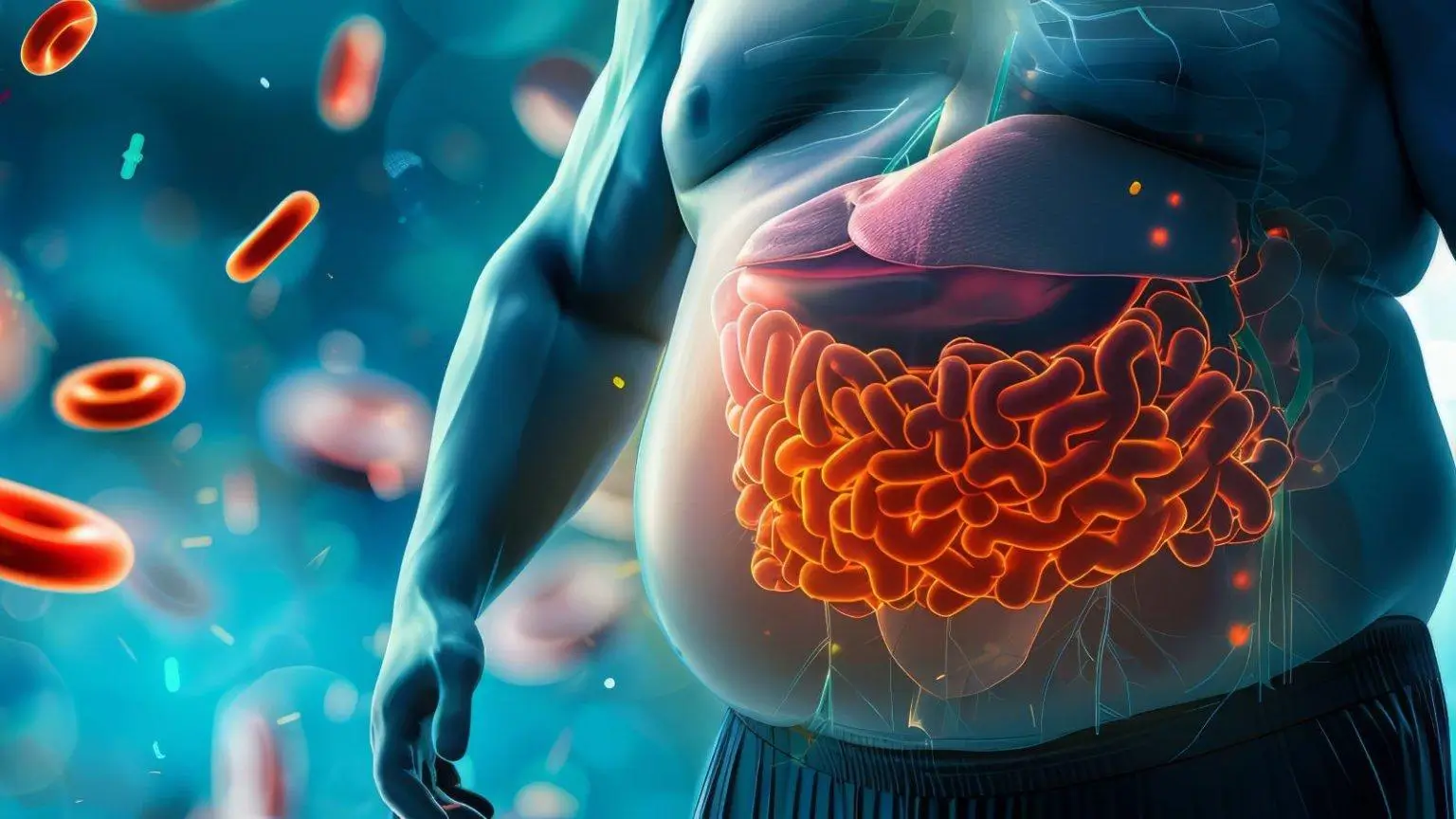
By the end of the 60 days, he had gained 8.5 kilograms (about 18.7 pounds) and his waist had grown by 10 centimeters (about 4 inches), with the added fat concentrated mainly around his abdomen. He also tired easily, had bigger mood swings, and found exercise increasingly difficult.
After the experiment, the director returned to his previous way of eating. According to the documentary, within a few months the weight he had gained gradually came down, and fatty-liver-related conditions also improved.

What this experiment most invites us to think about is this: we may pay close attention to fat and calories, yet overlook how much sugar is in a glass of juice, a tub of low-fat yogurt or a bowl of breakfast cereal.
Not Just Personal Diet: How Processed Food Affects Community Health
Another part of the documentary is especially memorable. The director travels to Amata, an Aboriginal community in the Australian central desert.
The film describes how residents’ lives were once closely tied to the land and traditional foods; as processed foods and soda gradually entered the community, eating habits changed. The film mentions that this community of fewer than 400 people once consumed about 40,000 liters of soda a year, and that obesity and diabetes became growing concerns.
Later, community elders launched a program called “Mai Wiru,” meaning “good food.” By improving the food supply in local stores, adding fresh fruits and vegetables, and providing nutrition education, the program encouraged residents to rebuild healthier eating habits.
This story reminds us that food choices are not purely a matter of personal willpower. The food supply, living environment and community education also affect a person’s long-term health.
With the Same Calories, Why Does Sugar Deserve Special Attention?
Benjamin Bikman, a professor of pathophysiology at Brigham Young University in the United States, has long studied insulin and metabolic disease. In his book Why We Get Sick, he explores the relationship between insulin resistance and obesity, fatty liver and other chronic health problems.
Simply put, after we eat sugary foods, the body releases insulin to help regulate blood sugar and the use of nutrients. Insulin is also involved in fat storage and energy metabolism.
Bikman’s view is that when sugar intake is excessive and meals are frequent, insulin may often stay at higher levels; long-term metabolic imbalance may then be associated with insulin resistance. When the body’s response to insulin declines, blood sugar regulation may be affected.
However, weight gain cannot be attributed simply to sugar or insulin. Total calories, types of food, activity level, sleep and an individual’s metabolic status all affect weight and health. That is why, when choosing foods, we should consider the quality of the overall diet rather than a single nutrient.
Neurologist David Perlmutter also explores, in his books, how diet affects health through the relationship between the gut and the brain. The gut microbiome and the gut-brain axis are areas of ongoing modern research, and diet may be linked to immune function and mood regulation through the gut environment.
This also reminds us that diet affects more than body weight; it may involve the gut, metabolism and overall quality of life.
Our Ancestors Warned Over 2,000 Years Ago: Don’t Overdo Sweets
Reading this, one is reminded of a passage from the Huangdi Neijing (The Yellow Emperor’s Classic of Internal Medicine), Suwen, “Discourse on Strange Diseases”:
“Such a person must have frequently eaten rich, sweet foods and become very fat. Fatness causes internal heat, and sweetness causes fullness in the middle; so the qi overflows upward and turns into xiaoke (wasting-thirst).”
In plain language, according to the traditional understanding of Traditional Chinese Medicine (TCM), regularly eating sweet, rich and greasy foods may cause internal heat and a feeling of fullness and distension, and over time may even develop into what the ancients called “xiaoke” (wasting-thirst). This is how ancient medicine described related symptoms and dietary imbalance; it cannot be directly equated with a modern diagnosis of diabetes.
The phrase “sweetness causes fullness in the middle” is especially worth pondering. Eating too many sweets not only adds sugar but can also throw the whole diet out of balance.
TCM has the saying “sweet flavor enters the spleen.” Naturally sweet foods such as rice, Chinese yam and red dates can be part of a daily diet in moderation; but according to TCM theory, consuming too much sweetness over a long period may affect the spleen and stomach’s transformation and transportation functions, leading to problems such as water-dampness and phlegm-dampness.
From the perspective of TCM health preservation, diet emphasizes moderation and balance, and one should not favor sweet, greasy or heavily processed foods for long periods.
Before You Buy, Flip It Over and Check the Nutrition Facts
In the United States, packaged foods usually carry a Nutrition Facts label. When shopping, besides checking total calories and fat, pay particular attention to Added Sugars.
Find the line “Includes __g Added Sugars” on the label to see how much added sugar is in each serving, along with its percentage of the Daily Value (% Daily Value).
- 5% Daily Value or less: generally considered low per serving.
- 20% Daily Value or more: generally considered high per serving and worth special attention.
For example, if a cup of fruit yogurt is labeled “Added Sugars 12g, 24%,” each serving contains 12 grams of added sugar, roughly equal to 3 teaspoons of sugar. Even if the package says low-fat or fruit-flavored, that does not mean the sugar content is necessarily low.
Fruit juice needs special attention. The added sugars in 100% pure fruit juice may be listed as 0 grams, but that does not mean it contains no sugar. You also need to check “Total Sugars,” because the natural sugars in the fruit itself count toward total sugars. A glass of juice can contain a considerable amount of sugar.
The World Health Organization (WHO) recommends that free sugar intake be kept below 10% of total daily calories, and suggests reducing it further to below 5%. For a 2,000-calorie daily intake, 5% is about 25 grams of sugar, or roughly 6 teaspoons.
How Can We Adjust Our Daily Diet?
There is no need to avoid all sweet foods completely out of worry about sugar. A more practical approach is to start adjusting the choices you make every day:
- Drink fewer sugary drinks: cut back on soda, sweetened tea drinks and large amounts of fruit juice.
- Choose unsweetened yogurt: check Added Sugars before buying, and don’t be drawn in only by low-fat or fruit-flavored packaging.
- Watch out for breakfast cereal: some breakfast cereals and cereal bars may contain a lot of added sugar, so compare the nutrition labels of different products.
- Choose more whole, natural foods: eat vegetables, fruits, whole grains, legumes and quality protein in moderation.
- Build the habit of reading labels: don’t look only at the health claims on the front of the package; turn it over and check the nutrition information on the back.
Conclusion: Truly Healthy Eating Means Understanding What’s in Your Food
That Sugar Film, through the director’s own 60-day experiment, makes us rethink an important question: are foods that look healthy really suitable to eat in large amounts every day?
Low-fat yogurt, breakfast cereal and fruit juice are not necessarily unhealthy foods, but if we ignore the sugar in them, we may still end up taking in too much sugar without realizing it.
From modern metabolic research to the TCM idea that “sweetness causes fullness in the middle,” both remind us that diet cannot be judged by calories alone, nor by the health labels on food packaging. Learning to identify added sugars, reducing excessive processed foods, and building a balanced diet and regular lifestyle are the important foundations of long-term health.
Changes in the body often come from small daily eating habits. The next time you buy yogurt, cereal or juice, take a moment to flip over the package and check the Nutrition Facts.
Stay tuned to Healthcare 520 for more content on nutrition, metabolic health and TCM health preservation.
Health Reminder
This article is for general health information only and does not constitute medical advice. The results of the individual experiment in the documentary cannot directly represent every person’s bodily response, nor can they alone prove that specific foods will cause the same health outcomes. If you have fatty liver, diabetes or other chronic conditions, please discuss a suitable diet with your doctor or a qualified dietitian. The documentary, books and authors mentioned in this article have no affiliation with Healthcare 520.