
Dry, Sore, Watery Eyes? TCM Tips From Constitution-Based Care to Daily Eye Care
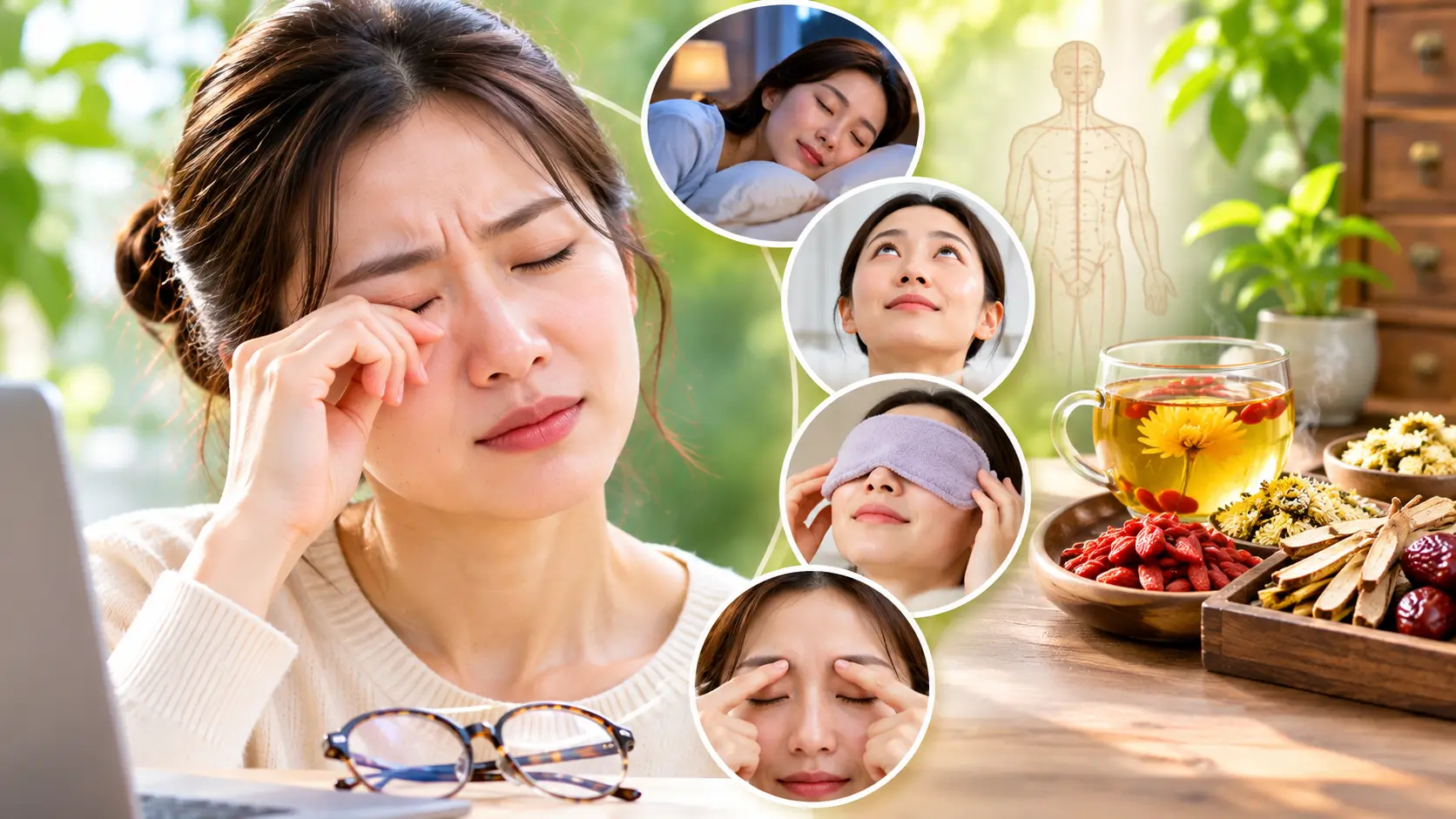
Take care of your eyes with healthy daily habits. Adequate sleep, warm compresses, gentle eye massage, and balanced nutrition can help support eye comfort and wellness.
In modern life, with long hours in front of screens, late nights scrolling on our phones and irregular eating, dry eye has quietly become a “lifestyle disease.” Dryness, soreness, blurred vision and even a gritty feeling like sand in the eyes leave many people relying on artificial tears for temporary relief. Yet the symptoms come and go and keep coming back. Why does dry eye happen? Traditional Chinese Medicine (TCM) can help you understand and improve it.
1. Why Do Dry Eyes Happen? TCM, the Eyes and the Five Organs
TCM holds that “the eyes are the essence of the five organs and six bowels.” The pupil belongs to the kidneys, the iris to the liver, the white of the eye to the lungs, the upper and lower eyelids to the spleen, and the inner and outer corners of the eye to the heart. The health of the eyes often reflects how well the five organs are functioning.
Of the five organs, the liver, kidneys, spleen and lungs are most closely connected to the eyes:
1. The liver stores blood and opens into the eyes:
When the eyes are overused for long periods, liver blood is depleted and the eyes easily become dry and tired.
2. The kidneys store essence and produce marrow:
With age and too many late nights, kidney essence becomes insufficient, often leading to blurred vision and dry eyes.
3. The spleen and stomach are the foundation of postnatal life:
Greasy, spicy and sweet foods tend to create damp-heat in the digestive system, which often shows up as more eye discharge and pinkish whites of the eyes.
4. The lungs govern the skin and body hair:
When wind-heat enters through the skin and injures the lungs, lung yin becomes insufficient, often leading to dry eyes with few tears and a dry throat.
Dry eye is therefore not just a “lack of tears,” but also the result of depleted yin fluids, undernourished liver and kidneys, or internal damp-heat.
2. Caring for Your Eyes by Constitution: Four TCM Dry Eye Patterns
TCM chooses different herbal formulas to improve dry eye depending on a person’s constitution:
1. Lingering Pathogenic Heat:
Typically shows up as bloodshot whites of the eyes, light sensitivity, watery eyes and dryness. Sangbaipi Tang may be used to clear heat and benefit the lungs.
2. Lung Yin Deficiency:
Typically shows up as dry eyes with few tears, eyes that tire easily with prolonged use, and even blurred vision. Whole-body signs may include a dry cough with little phlegm, a dry throat and constipation. Yangyin Qingfei Tang may be used to nourish yin and moisten the lungs.
3. Spleen-Stomach Damp-Heat:
Dry, painful eyes, pinkish whites, white frothy eye discharge and heavy eyelids. Whole-body signs may include a sticky mouth or bad breath, scanty dark urine and constipation. Sanren Tang may be used to clear damp-heat and open the flow of qi.
4. Liver and Kidney Yin Deficiency:
Dry eyes, light sensitivity, blurred vision, frequent blinking and pinkish whites of the eyes. Qiju Dihuang Wan may be used to tonify the liver and kidneys and nourish yin and blood.
3. Five Daily Eye Care Tips
1. Adjust Your Sleep and Screen Habits
Going to bed early nourishes the liver and kidneys, and the liver opens into the eyes. From 11 p.m. to 3 a.m., meridian qi flows through the liver and gallbladder meridians, so you should be sound asleep during these hours. When using a computer or screen, follow the “20-20-20 rule”: every 20 minutes, look at something 20 feet away for 20 seconds.
2. Eye Exercises
Gently close your eyes, then squeeze your eyelids shut tightly, then open your eyes fully. Hold each step for 2 seconds and repeat 15 times, twice a day, to stimulate tear production and keep your eyes moist.
3. Warm Compresses
Apply a towel or heated eye mask at about 40°C (104°F) to your eyes for 10–15 minutes, once or twice a day, to improve circulation around the eyes and relieve dryness.
4. Acupressure
Use both thumbs to press and knead the following points in turn, 2–3 minutes each, to relax the muscles around your eyes, improve circulation and relieve eye fatigue. Use enough pressure to feel a mild ache. Massage twice a day, and a few extra times when your eyes feel tired.
Zanzhu point (BL2): In the depression at the inner end of the eyebrow.
Yuyao point: At the midpoint of the eyebrow, in the hollow of the eye socket bone.
Sizhukong point (SJ23): In the depression at the outer end of the eyebrow.
Jingming point (BL1): On the face, in the depression just above the inner corner of the eye, in the space between the inner edge of the eye socket and the eyeball.
Chengqi point (ST1): Directly below the eye, in the hollow of the eye socket bone.
Taiyang point: At the temple, in the depression about one finger-width behind the midpoint between the outer end of the eyebrow and the outer corner of the eye.
5. Eat a Healthy Diet
Eat more omega-3 fatty acids (such as salmon and flaxseed), vitamins A and C (carrots, kiwi) and antioxidant-rich foods (blueberries, dark leafy greens). These nutrients help improve tear production and fight inflammation, easing dryness and discomfort. At the same time, cut back on spicy, grilled and fried foods, and stay well hydrated.
4. A Reminder About Daily Dry Eye Care
Besides herbal care and daily habits, many people also choose dietary supplements such as EyeMoist for daily eye health support.
Dry eye may seem like a minor problem, but if left unaddressed, it can affect your productivity and quality of life. Give your eyes a little care every day: blink more, use warm compresses, avoid late nights, eat light and keep your mood relaxed, so your eyes can be clear and bright again.
Please note that the herbs and dietary supplements mentioned above should be used as part of a comprehensive plan under the guidance of a qualified practitioner.